Clouds, vessels, and an excerpt
August 11, 2024
I’m starting to write this from 31,978 feet at 498 mph (9,747 m at 796km/h for the empirical folks) in the belly of a (mostly) metal beast, simply as an exercise in observation. Looking out at a skyscape of clouds resembling white valleys and mountains of condensation, the infrequent breaks in the clouds exposing what lies beneath - earthy patches of open field jigsawed into one another.
These gradually give way to the blue expanse of one of the Great Lakes, the color filling my window, dissipating clouds casting their shadows down to the water’s surface and gliding past us, weightless clusters of fluff. My eyes are drawn to the crevasses and irregularities in the underwater sediment, likely hidden by the water’s reflective surface far below. I wonder what the sand and earth are like down there, how it must feel to the hands, or what it feels like under the feet. I’m reminded of clay.
I think of how the act of collecting and shaping this damp matter, introducing it to fire, painting on patterns and glyphs made of more earthborn materials, has created objects that were imbued with spiritual and ritualistic significance throughout history. Entire cultural stories and mythologies adorn these vessels carrying water, wine, oils, viscera, or other contents. They transcended their superficial earthenware function and connected this world to the spiritual and became instruments that created portals to the afterlife for their contents.
August 18, 2024
A week after the mental/digital note above and having been back on the ground with another Yupanki show under my belt, I’m still thinking of the practice of vessel making. I’ve thrown clay only once before (messily and poorly), and given the skill it takes for simpler forms, I’m always astounded by how much went into the trial and errors of pre-Columbian vessels. Often depicted as “simpler” people, so many indigenous cultures had existing governments, social strata, economies, religious practices, and sciences in place.
Specifically thinking of the Andes, their vessels often denoted characteristics of the above by decorative quality or by physical shapes (or both), even referencing the connection between worlds, such as the earth and sky or earth and sea. The vessel below with the bird motif highlights the significance of harmony between the Nasca peoples and the coast, considering their relationship with water in their desert environment.
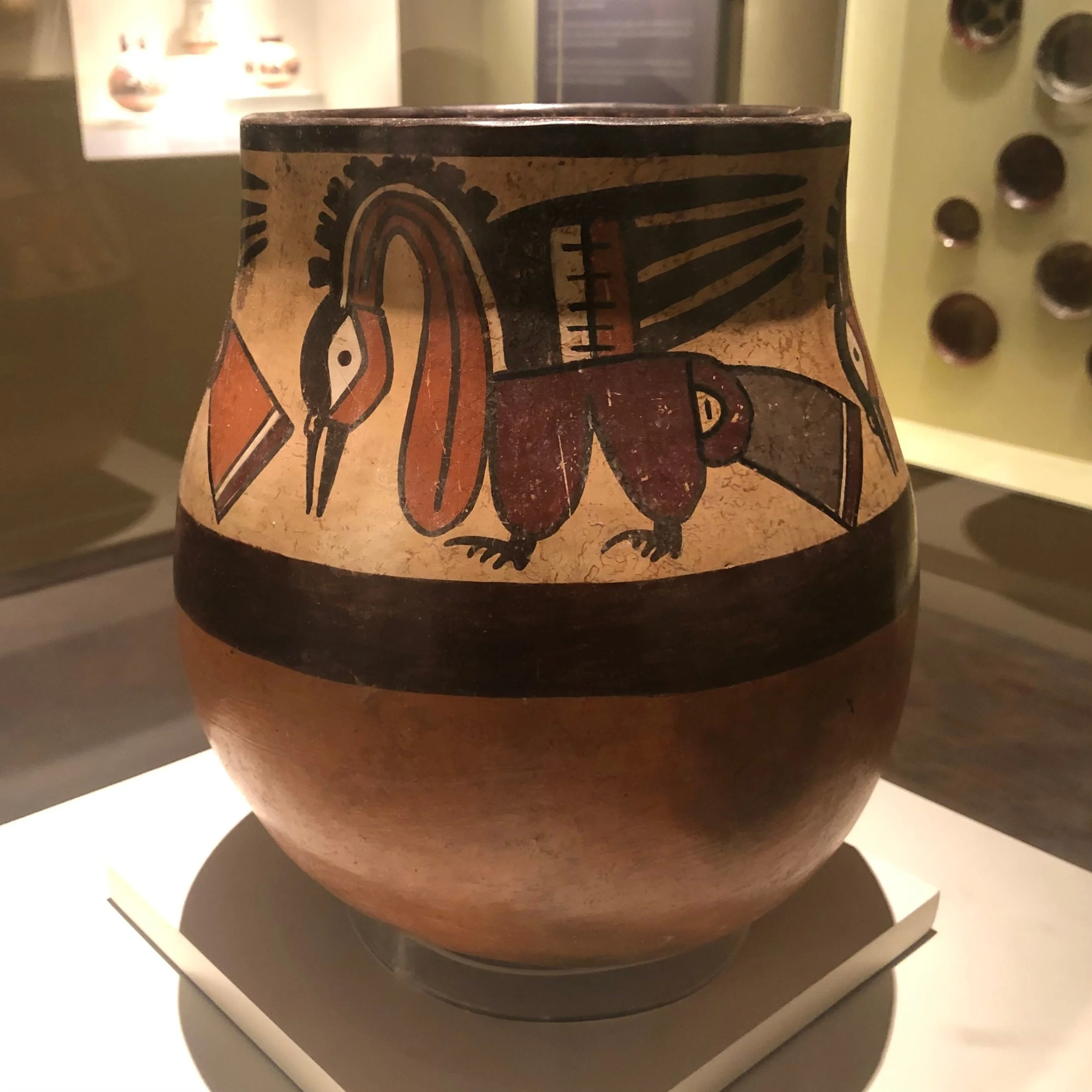
Nasca ceramic vase
(Museo de arte Precolombino, Cusco)
Other more intricate vessels also serve musical purposes that could be performed with by blowing air through a mouthpiece, or by filling with a liquid to change the tonality or even rocking the filled vessel back and forth to produce whistling sounds from the air pressure entering and exiting the vessel.
For my song/poem Somos Vasos (We Are Vessels), I was drawn to the type of vessel used to carry or store material, specifically making it contain earth in the poem. I reference the contents transmuting between solid and liquid, thinking about how we often need to change within in order to adapt to our surroundings while also trying to stay true to ourselves.
Here’s an excerpt:
"Pachamama,
whom I watched birth mountains and command legions
of stone warriors awoken from their earthly chasms,
spits into the ground at her feet and mixes
with delicate finger tips.
A gentle, caressing spiral into the wet earth.
I was reminded of tales of a man creating man
from breath and dirt.
But did he ever feel the tender touch
a mother’s love could give?
She sculpts the air and lifts her hand.
A keru,
a vessel,
full of earth,
rises from the ground.
She presents it to me, whispering
about its age,
how it’s not as old as the ones that were never made,
the ones that will not taste air,
but old nonetheless.
She sang a song of Los Olleros,
the ancient potters who shaped it when
First Mountain touched the sky.
The earth within,
reddish brown like her,
reddish brown like me.
The grains are the remnants
and echoes
of our destinies.
The color, she says,
is gift from the sun
worth more than a crown.
Her fingertips pinch from the contents
of what was once earth
but liquefies into blood at her touch.
A transmuted droplet rolls off her finger,
falling back into the keru
as earth."
"Somos Vasos"
Un Lugar Lejos: Valleys
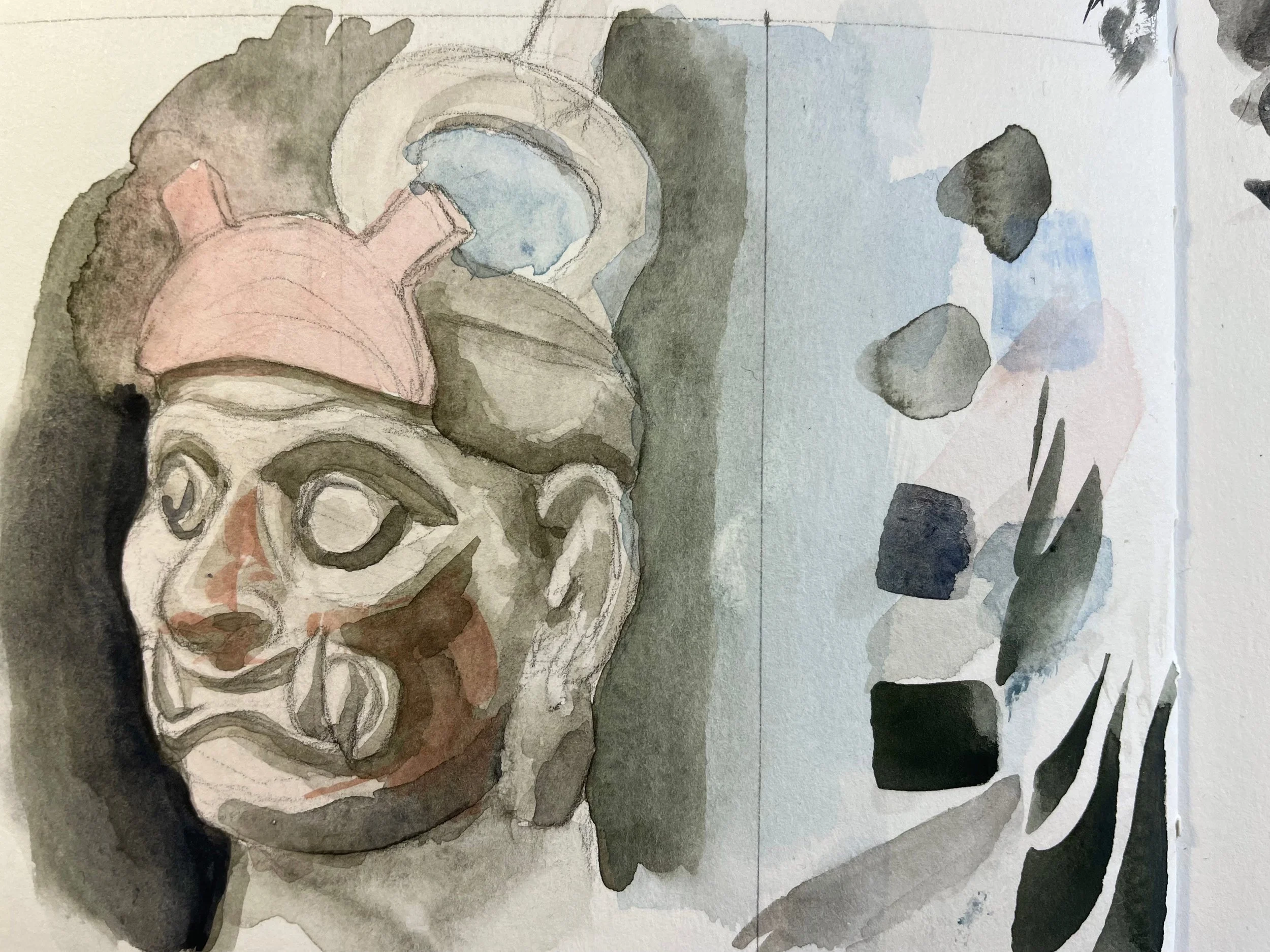
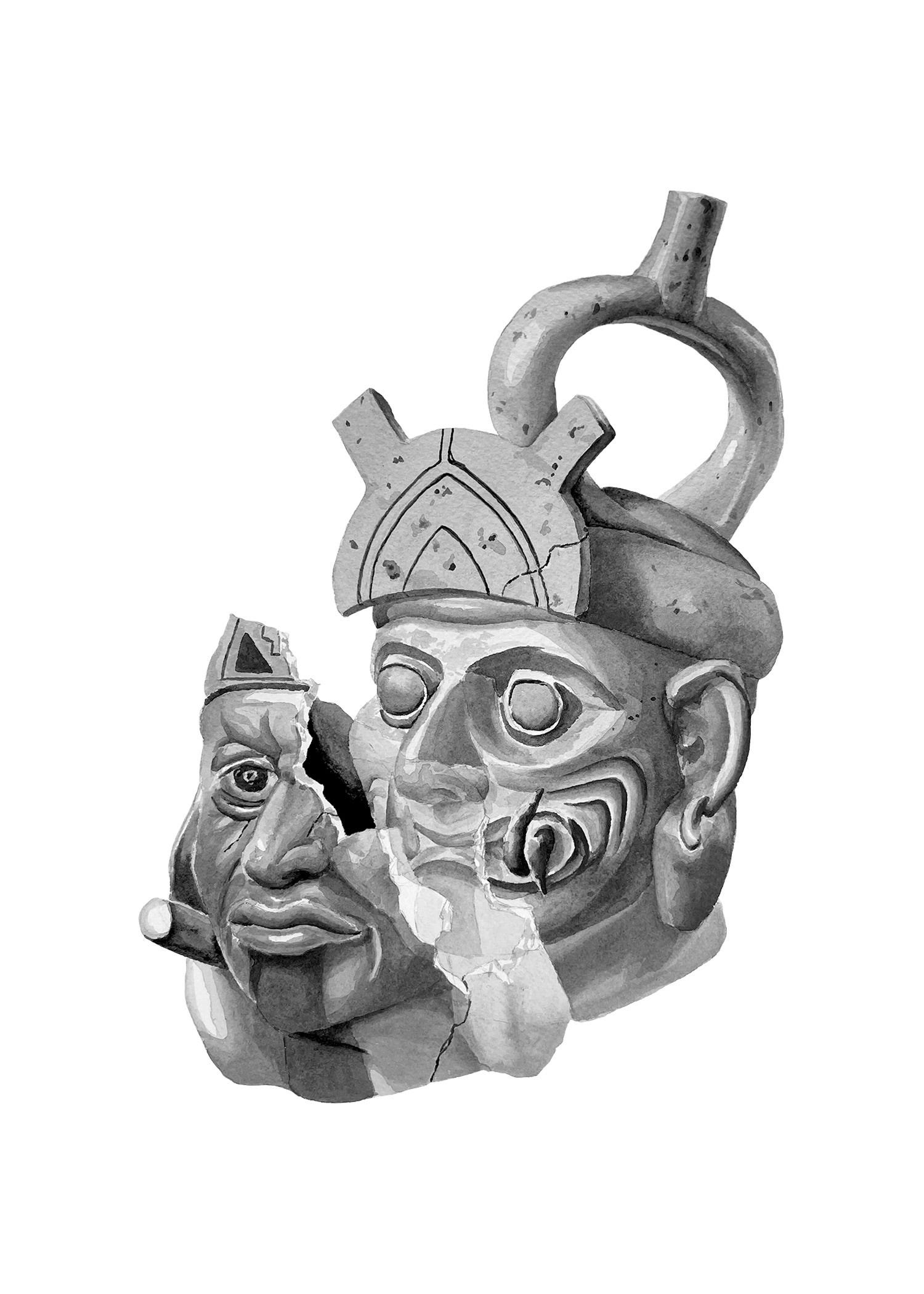
Early watercolor warmup study | Final painting for Somos Vasos in "Un Lugar Lejos: Valleys"
The poem makes me wonder about the spirits contained within all aspects of nature that we have gradually lost connection to in favor of land speculation and development, but that original stewards of lands across the world still fight to protect. I loved the idea that something as unsuspecting as earth could change shape or consistency at a touch, while great masses of earth and stone like mountains could be given life as monolithic creatures that can be called forth from hibernation.
Musically as Yupanki, I like to think that “Somos Vasos” is a dialogue between the narrator and Pachamama in an otherworldly space, surrounded by the mountains and other spirits. A reimagined version of the song, “Vaso de Los Olleros” (Vessel of The Potters), brings in more heavy and rhythmic sonic elements, which in a sense serves as a more visceral soundtrack to their interactions as a group which includes events not described in the poem. I hope the listener/reader can conjure up and visualize those events themselves after spending some time with each.
Here’s a link to the Vessels EP, which contains a few versions of “Somos Vasos.”